
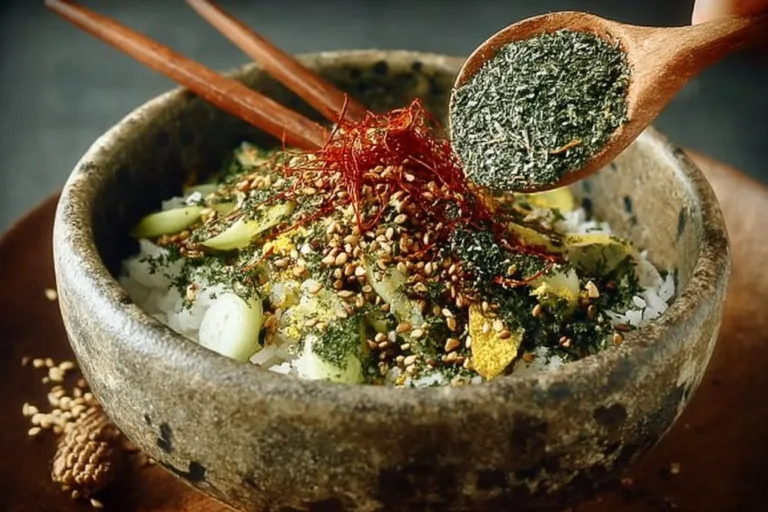
why make this recipe
Furikake is a popular Japanese rice seasoning that adds flavor and texture to dishes. Making your own vegan furikake at home is simple and allows you to customize the ingredients to fit your taste. This recipe is not only delicious but also healthy, making it a great addition to your meals.
how to make Furikake
Ingredients:
- ¼ cup white sesame seeds
- 4 teaspoons black sesame seeds
- ¼ cup nori (cut or crumpled into tiny bits)
- 1 ¼ teaspoons sugar (or coconut sugar)
- ½ teaspoon salt
- ½ teaspoon ichimi togarashi (or gochugaru)
- ½ teaspoon wasabi powder (optional)
Directions:
- Toast the white and black sesame seeds in a dry skillet over medium heat for 2–3 minutes, stirring frequently, until golden and fragrant. Remove from the skillet and allow to cool.
- In a mixing bowl, combine the toasted sesame seeds, black sesame seeds, crumbled nori, sugar, and salt. Stir until well mixed.
- If using optional additions, add the ichimi togarashi or wasabi powder and stir to evenly distribute.
- Transfer the furikake to an airtight container and store it in a cool, dry place. Use as a topping for rice, noodles, or salads.
how to serve Furikake
Furikake is versatile and can be served in many ways. Sprinkle it over freshly cooked rice for a tasty side dish. It also works well on top of noodles, in salads, or even popcorn for a unique snack. You can also mix it into dishes like stir-fries or soups for an added flavor boost.
how to store Furikake
To keep your homemade furikake fresh, store it in an airtight container in a cool, dry place. It should last for several weeks, allowing you to enjoy its flavor in various meals.
tips to make Furikake
- Make sure to watch the sesame seeds carefully while toasting, as they can burn quickly.
- Feel free to adjust the amount of sugar, salt, and spices based on your flavor preferences.
- For a creative twist, consider adding other ingredients like dried herbs or different types of seaweed.
variation
You can customize this furikake recipe by adding different spices or seeds. For example, try adding dried chili flakes for extra heat or crushed peanuts for a crunchy texture.
FAQs
Can I use other types of seaweed for furikake?
Yes, you can use other seaweeds like dulse or wakame if you prefer a different flavor profile.
Is furikake gluten-free?
Yes, this vegan furikake recipe is gluten-free as long as you ensure that the ingredients you use are certified gluten-free.
How long does furikake last?
When stored in an airtight container in a cool, dry place, furikake can last for several weeks. However, to enjoy the best flavor, consume it within a month.

Furikake
Ingredients
Method
- Toast the white and black sesame seeds in a dry skillet over medium heat for 2–3 minutes, stirring frequently, until golden and fragrant. Remove from the skillet and allow to cool.
- In a mixing bowl, combine the toasted sesame seeds, black sesame seeds, crumbled nori, sugar, and salt. Stir until well mixed.
- If using optional additions, add the ichimi togarashi or wasabi powder and stir to evenly distribute.
- Transfer the furikake to an airtight container and store it in a cool, dry place.