
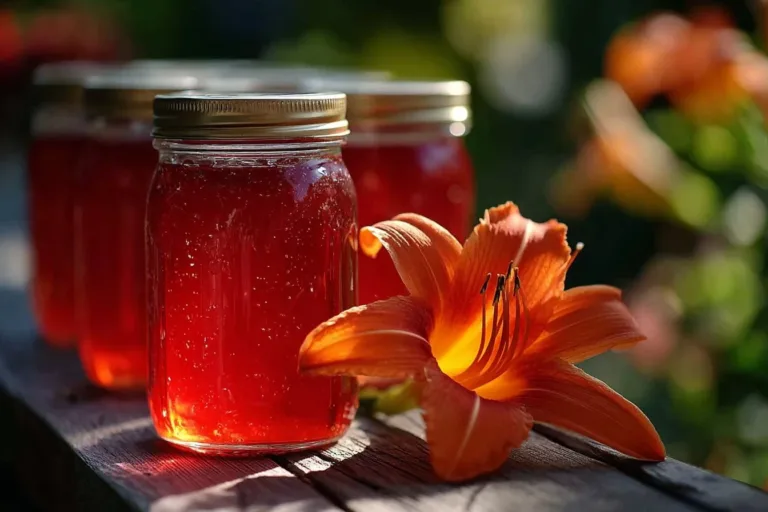
why make this recipe
Making Daylily Jelly is a delightful way to utilize these beautiful and tasty flowers. Many people grow daylilies in their gardens, but few realize that they can be enjoyed beyond just their beauty. This jelly not only captures the lovely flavor of daylilies but also provides a unique twist to your breakfast table. Plus, it’s a fun project that fills your kitchen with sweet floral aromas!
how to make Daylily Jelly
Ingredients:
- Daylily petals: 4 cups of petals torn up into smaller pieces
- Water: 4 cups of boiling water
- Sugar: 7.5 cups of cane sugar
- Lemon juice: 2 tbsp
- Pectin: 2 envelopes of liquid pectin
- Butter: 1 tablespoon of butter to help eliminate foaming
Directions:
- Harvest the daylily blossoms to get enough for 4 cups.
- Tear the daylily petals into small pieces to prepare for making a flower infusion.
- Pour 4 cups of hot water over the daylily petals.
- Cover the mixture and allow it to infuse for twelve to twenty-four hours.
- After infusion, strain the daylilies from the fluid, making sure to keep four cups of the daylily flower infusion for the jelly base. If you have a little less fluid, you can add extra water to complete the measurement.
- In a large pot on the stove, mix together the flower infusion, sugar, lemon juice, and butter.
- Keep an eye on the color change as you add the lemon juice!
- Bring the mixture to a rolling boil.
- Boil for one minute.
- Remove from the stove and stir in the two packages of pectin.
- Stir for five minutes to reduce foaming.
- Pour the jelly into sterilized mason jars, filling to within a quarter inch from the top of the rim.
- Wipe off the rims before placing the jar toppers.
- To ensure the jelly lasts longer, use a water bath canner and boil for 10 minutes.
how to serve Daylily Jelly
Daylily Jelly makes a wonderful addition to many dishes. You can serve it on toast, biscuits, or scones. It also pairs well with cream cheese on crackers for a tasty snack. Use it to add a splash of color and flavor to desserts like cheesecake or ice cream.
how to store Daylily Jelly
Store your Daylily Jelly in a cool, dark place. If properly sealed and processed, it can last for up to a year. Once opened, keep it in the refrigerator and use it within a few weeks.
tips to make Daylily Jelly
- Ensure that the daylily petals are fresh and free from dirt or chemicals.
- Be patient with the infusion process; a longer infusion time can enhance the flavor.
- Make sure to use sterilized jars to prevent contamination and extend shelf life.
variation
You can experiment with your Daylily Jelly by adding other flavors, such as ginger or mint, to give it a unique twist. Mixing in a bit of citrus zest can also brighten the taste.
FAQs
Can I eat daylily petals raw?
Yes, daylily petals are edible and can be eaten raw. They add a nice touch to salads and can be used as a garnish.
Is it safe to use wild daylilies?
Yes, as long as you correctly identify the plant as Hemerocallis species, wild daylilies are safe to eat. Always avoid using daylilies treated with pesticides or herbicides.
What should I do if my jelly doesn’t set?
If your jelly doesn’t set, you can reheat it and add more pectin to help it thicken. Make sure to follow the instructions on the pectin package for the best results.
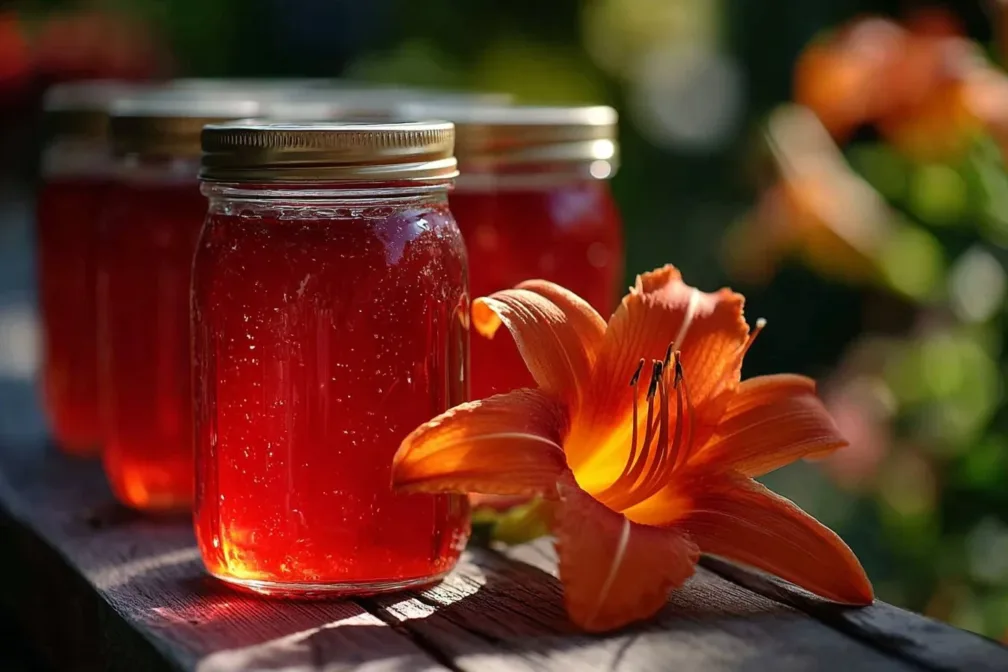
Daylily Jelly
Ingredients
Method
- Harvest the daylily blossoms to get enough for 4 cups.
- Tear the daylily petals into small pieces.
- Pour 4 cups of hot water over the torn daylily petals.
- Cover and allow the mixture to infuse for twelve to twenty-four hours.
- After infusion, strain the daylilies from the fluid, keeping four cups of the infusion.
- In a large pot, mix the flower infusion, sugar, lemon juice, and butter.
- Bring the mixture to a rolling boil.
- Boil for one minute.
- Remove from the stove and stir in the two packages of pectin.
- Stir for five minutes to reduce foaming.
- Pour the jelly into sterilized mason jars, filling to within a quarter inch from the top.
- Wipe off the rims before placing the jar toppers.
- Process the jars in a water bath canner for 10 minutes to ensure shelf life.