
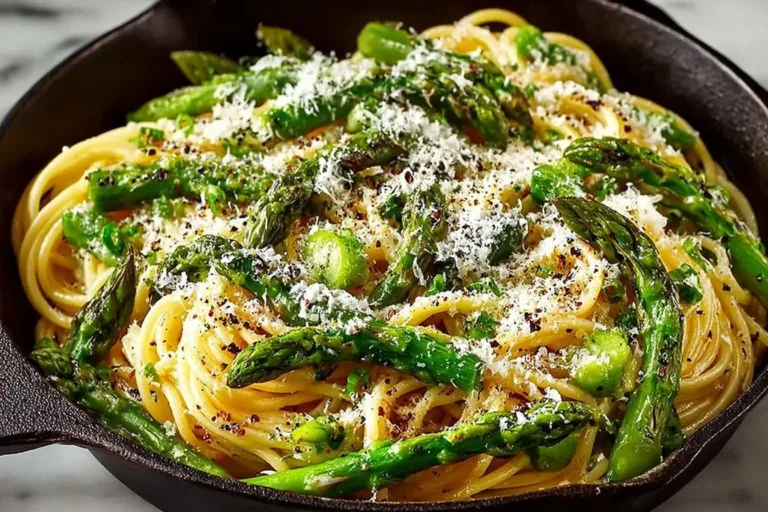
As the sun sets on a warm spring evening, the enticing aroma of sautéed garlic and fresh asparagus wafts through the air, teasing your senses and whetting your appetite. Picture a plate of al dente spaghetti, tossed in a bright, zesty lemon sauce and mingled with vibrant green asparagus. This effortless yet elegant dish transforms a simple pasta night into a delightful culinary experience. Not only does the Asparagus Pasta deliver a burst of flavors in every forkful, but it also brings together seasonal ingredients that celebrate the beauty of spring.
What makes this recipe special is its ability to be both delicious and quick to prepare, making it ideal for busy weeknights or spontaneous gatherings with friends. With just a handful of ingredients and a cooking time of under 30 minutes, you can create a comforting and fresh dish that pleases everyone at the table. Whether you’re a seasoned cook or just starting in the kitchen, this Asparagus Pasta recipe promises to impress with its bright flavors and satisfying textures.
Why Make This Recipe
You’ll adore the flavor profile of this dish, where the earthiness of asparagus meets the brightness of lemon and the nuttiness of Parmesan cheese. Each ingredient complements the others perfectly, enhancing the overall taste without overpowering your palate.
Not only is the Asparagus Pasta quick to make, but it’s also a healthy option packed with vitamins and fiber. With asparagus being a nutrient-dense vegetable, you get to enjoy a meal that nourishes your body while still being a culinary delight.
Budget-wise, this recipe is friendly, requiring minimal ingredients that can typically be found in your pantry or at your local grocery store. With versatile options for pasta and cheese, you can create a custom version based on your preferences or what you have on hand.
Whether you’re looking for a delicious dinner idea or a dish that can impress guests, this Asparagus Pasta is sure to shine on your table.
How to Make Asparagus Pasta Recipe
Ingredients
- 1 pound asparagus, preferably thin
- 4 cloves garlic
- 1 medium lemon
- 1 ounce Parmesan cheese (1/2 cup firmly packed freshly grated or 1/3 cup store-bought grated), plus more for serving
- 1 pound dried spaghetti or other long pasta, such as linguine or bucatini
- 4 tablespoons olive oil, divided
- 1 1/2 teaspoons kosher salt, divided
- 1/4 teaspoon freshly ground black pepper
- 1/4 teaspoon red pepper flakes (optional)
- Fresh basil leaves, for serving (optional)
Directions
- Prepare Ingredients: Begin by bringing a large pot of salted water to a boil. Trim 1 pound of asparagus and cut it crosswise on a slight diagonal into 1 1/2-inch pieces, yielding about 3 cups. Mince 4 garlic cloves and finely grate the zest of 1 medium lemon (about 1 tablespoon), then juice the lemon until you have 3 tablespoons.
- Cook Pasta: Add 1 pound of dried pasta to the boiling water. Cook the pasta for approximately 9 minutes, which is 1 minute less than the package instructions for al dente.
- Sauté Asparagus: While the pasta is cooking, heat 3 tablespoons of olive oil in a large skillet over medium heat until shimmering. Add the asparagus, 1 teaspoon of kosher salt, 1/4 teaspoon of black pepper, and 1/4 teaspoon of red pepper flakes if desired. Sauté the asparagus until it is bright green and crisp-tender, roughly 3 to 4 minutes. Then, add the minced garlic and sauté until fragrant, about 1 minute. Remove the skillet from heat and stir in the lemon zest and juice.
- Combine Pasta and Asparagus: Reserve 1 cup of the pasta water, then drain the pasta when it’s ready. Return the skillet to medium heat and add the drained pasta, the remaining 1/2 teaspoon of kosher salt, and the reserved pasta water. Gently toss and stir the pasta until it becomes al dente and almost all of the pasta water is absorbed, about 1 to 2 minutes.
- Finish and Serve: Remove the pan from heat. Add the grated Parmesan cheese and the remaining 1 tablespoon of olive oil, tossing well to combine. Serve the pasta garnished with additional grated Parmesan and fresh basil leaves if desired.
How to Serve Asparagus Pasta
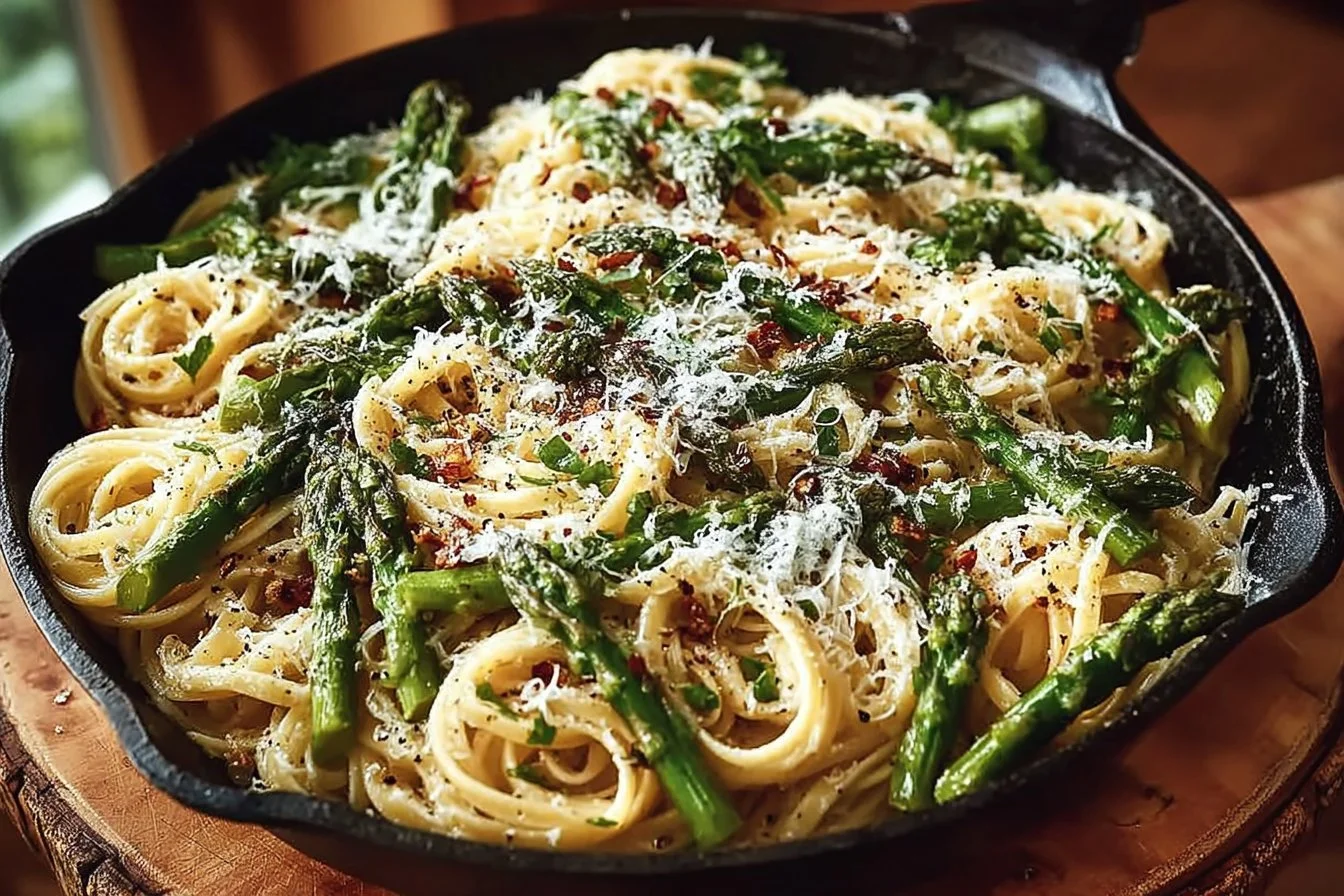
The Asparagus Pasta is best enjoyed hot, allowing the flavors to meld beautifully. For an appealing presentation, consider plating the pasta in shallow bowls, topped with extra grated Parmesan and a sprinkle of freshly cracked black pepper. A light drizzle of olive oil can elevate the dish even further.
This pasta pairs wonderfully with a crisp garden salad or roasted vegetables. To drink, a chilled white wine, such as Sauvignon Blanc, complements the lemony notes perfectly. Ample fresh basil leaves not only add flavor but also infuse some vibrant color to your dish.
How to Store Asparagus Pasta
To store leftovers, place the Asparagus Pasta in an airtight container and refrigerate it. It will keep well for up to 3 days. If you’d like to freeze the dish, transfer it to a freezer-safe container, label it with the date, and it can last for about 2 months. When ready to eat, thaw the pasta overnight in the refrigerator before reheating.
Reheating can be done using the microwave on a medium setting, but for best results, consider using the stovetop. Gently reheat in a skillet over low heat, adding a splash of water or olive oil to revive the dish’s moisture. Always check that leftovers are still fresh by looking for any off smells or texture changes.
Tips to Make Asparagus Pasta Recipe
- Prep Ahead: Chop your asparagus and mince the garlic ahead of time to save on prep when you’re ready to cook.
- Substitution: If you don’t have asparagus, try using broccoli, spinach, or peas for a similar fresh taste with a different texture.
- Prevent Sticking: To avoid the pasta sticking together after draining, toss it with a little olive oil immediately after draining.
- Equipment Alternative: If you don’t have a skillet, a large pot can work as long as it has a wide base to sauté the asparagus.
- Batch Cook: Make extra pasta and store in the fridge for another meal during the week; just add more sautéed vegetables or protein to create a different dish.
- Texture Tip: For a creamier texture, add a splash of pasta water while tossing the pasta to help create an emulsion.
- Flavor Boost: Experiment by adding fresh herbs like thyme or tarragon for different flavor profiles.
- Dietary Option: For a vegan variation, omit the cheese and substitute with nutritional yeast for a similar cheesy flavor.
- Leftover Challenge: Transform leftover pasta into a delightful pasta salad by adding diced tomatoes, chickpeas, and a balsamic vinaigrette.
- Restaurant Technique: To mimic a restaurant-style finish, toss the pasta and sauce in the skillet off the heat while using a bit of pasta water to create a silky sauce.
Variations
- Vegan Delight: For a plant-based version, replace Parmesan cheese with nutritional yeast and use olive oil. Add vibrant cherry tomatoes for color and sweetness.
- Protein-Packed Pesto: Toss in shredded rotisserie chicken or cooked shrimp for a protein boost. Drizzle with store-bought pesto for an herbaceous kick.
- Gluten-Free Goodness: Swap the dried pasta with your favorite gluten-free brand and enjoy the same delicious flavors without the gluten.
- Spicy Asparagus Twist: Add diced fresh chili or a dollop of chili paste to the sauté for an exciting kick that elevates the dish.
- Mediterranean Influence: Incorporate olives and sun-dried tomatoes, and sprinkle with feta cheese for a flavorful Mediterranean-inspired meal.
FAQs
Can I make this ahead of time?
While the Asparagus Pasta is best served fresh, you can prepare the asparagus and garlic ahead of time. Mix the components together just before serving for optimal flavor and texture.
How do I store leftovers?
Place any leftovers in an airtight container and refrigerate for up to 3 days. Make sure to cool it down to room temperature before sealing the container to maximize freshness.
Can I freeze this dish?
Yes, you can freeze the Asparagus Pasta! Just remember to store it in a freezer-safe container. Thaw in the fridge overnight and reheat gently.
What can I substitute for Parmesan cheese?
If you don’t have Parmesan, Pecorino Romano or Grana Padano can work well as a substitute. For a dairy-free option, consider using nutritional yeast or store-bought vegan Parmesan.
How do I prevent the pasta from sticking?
To avoid sticky pasta, make sure to stir occasionally while it cooks and toss it in olive oil after draining. This adds flavor and helps keep it separated.
Is this dish gluten-free?
The original recipe calls for regular pasta, but you can easily make it gluten-free by using gluten-free pasta varieties available at most grocery stores.
Can I double this recipe?
Absolutely! Simply double all the ingredients and use a larger pot and skillet to accommodate the increased quantity.
What if I don’t have a skillet?
If you don’t own a skillet, a large pot can suffice for sautéing your ingredients if it has a wide base. Just ensure to cook over medium heat to avoid burning.
With its vibrant flavors and quick preparation time, the Asparagus Pasta is a perfect choice for any occasion, whether a weeknight dinner or a spring gathering with loved ones. Enjoy the fresh tastes of spring with every bite!
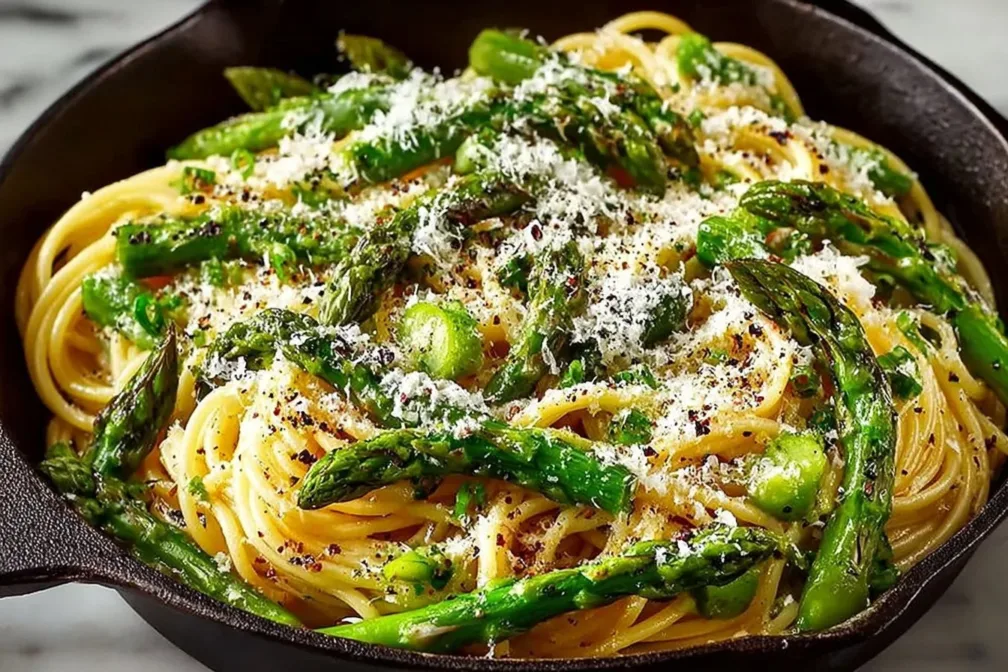
Asparagus Pasta
Ingredients
Method
- Bring a large pot of salted water to a boil.
- Trim asparagus and cut it crosswise into 1 1/2-inch pieces.
- Mince garlic and finely grate lemon zest, then juice the lemon.
- Add dried pasta to the boiling water and cook for approximately 9 minutes.
- Heat 3 tablespoons of olive oil in a large skillet over medium heat.
- Add asparagus, 1 teaspoon of kosher salt, black pepper, and red pepper flakes, sautéing for 3 to 4 minutes.
- Add minced garlic and sauté until fragrant, about 1 minute.
- Remove from heat and stir in lemon zest and juice.
- Reserve 1 cup of pasta water, then drain the pasta.
- Return the skillet to medium heat, add drained pasta, remaining kosher salt, and reserved pasta water.
- Toss and stir the pasta until al dente and water is almost absorbed, about 1 to 2 minutes.
- Remove from heat, add grated Parmesan and the remaining olive oil, and toss well.
- Serve garnished with additional Parmesan and fresh basil, if desired.